

Bimetallic Bushes
Why Choose Us
Professional Team
We have a team of experienced professionals dedicated to ensuring that every aspect of our business follows the highest standards.
Rich Experience
Dedicated to strict quality control and attentive customer service, our experienced staff is always available to discuss your requirements and ensure complete customer satisfaction.
High Quality
Our products are manufactured or executed to very high standards, using the finest materials and manufacturing processes.
Our Service
Our professional team is composed of pre-sales, sales, and after-sales experts who are dedicated to providing excellent service throughout the entire customer service process.
What is Bimetallic Bushes
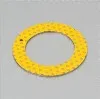
Bimetallic bushing is a kind of oil-free lubrication bushing. It is based on high-quality low-carbon steel base and sintered copper alloy on the surface. After several times of high-temperature sintering and dense rolling, it is rolled into a bimetallic strip of copper and steel.
-
![Material Specification Sheet – MG-6]() Material Specification Sheet – MG-6Read More
Material Specification Sheet – MG-6Read MoreMaterial specification sheet:MG-6 is Ball and roller bearing steel according to EN ISO 683-17. Ball and roller bearing steel for balls and rollers of any dimension,rings and discs up to 30mm
-
![MG-090 Bronze Wrapped Bushings Specification & Tolerance]() MG-090 Bronze Wrapped Bushings Specification & ToleranceRead More
MG-090 Bronze Wrapped Bushings Specification & ToleranceRead MoreMG-090 Bronze Wrapped Bushings Specification & Tolerance is high speed CNC bearing, high speed equipment joints bearings.Application for Hotels, Building Material Shops, Manufacturing Plant
-
![Metal-Polymer Composite Bearings]() Metal-Polymer Composite BearingsRead More
Metal-Polymer Composite BearingsRead MoreMetal-Polymer Composite Bearings are sleeve, Metal-polymer Oilless Bushing.Can be used where no oil can be applied or oil is difficult to be applied. Low wear, low friction and with long life. Load
-
![MG-800 Bimetallic Self-lubricating Bushes]() MG-800 Bimetallic Self-lubricating BushesRead More
MG-800 Bimetallic Self-lubricating BushesRead MoreMG-800 系列双金属轴套、轴瓦、止推垫片,以优质低碳钢为基体,表面烧结青铜粉,适用于高载低速下的旋转,摇摆运动。具有摩擦系数低、耐磨性能好、使用寿命长、抗咬合性能好等特点,铜合金层可根据要求加工出各种类型的油穴、油槽。产品被广泛应用于矿山机械、汽机车、建筑机械、农用机械、轧钢机械等。 MG-800 Bimetallic self-lubricating bearing uses high
-
![Three-layer Metal-polymer Self-lubricating Bearings]() Three-layer Metal-polymer Self-lubricating BearingsRead More
Three-layer Metal-polymer Self-lubricating BearingsRead More① Polymer Lining € Provides Bearing properties, wear resistance, low friction… ② Bronze Sinter € Provides Bond & Heating Transfer ③ Metal Backing € Provides Mechanical Strength ④ Cu/Tin Plating €
-
![MG-6T Tension Bushing]() MG-6T Tension BushingRead More
MG-6T Tension BushingRead MoreMG-6T Tension Bushing:spring steel coiled bearing is made of spring steel plate as basematerial, and then ishardened by the whole,and the inner and outer surface is ground and processed.This product
-
![Self-lubricating Bushes]() Self-lubricating BushesRead More
Self-lubricating BushesRead MoreMG-800 Bimetallic self-lubricating bearing uses high quality low-carbon steel plate as backing, sintered porous bronze as its liner, suitable for rotatory oscillating, reciprocating movements in the
-
![Bimetal Wrapped Bushings]() Bimetal Wrapped BushingsRead More
Bimetal Wrapped BushingsRead MoreMG-800 Bimetallic self-lubricating bearing uses high quality low-carbon steel plate as backing, sintered porous bronze as its liner, suitable for rotatory oscillating, reciprocating movements in the


Advantages of Bimetallic Bushes
Material Qualities: The CuSn10Pb10 alloy strikes an excellent balance between strength and malleability, showcasing a hardness range of 60-100 HB.
High Load Support: Capable of supporting significant loads, these bearings have a maximum PV value of 10N/mm²·m/s and can handle up to 65 N/mm² in load capacity.
Temperature Resistance: They perform efficiently under temperatures up to 150℃ with grease lubrication and up to 250℃ with oil lubrication.
Adaptability: Ideal for a myriad of applications, including engine components, transmission systems, and other heavy-duty machinery.
Maintenance Needs: To avoid early wear and ensure ongoing smooth operation, periodic lubrication is required.
Customizable Design: The bearings’ dimensions and configuration can be tailored to match specific requirements.
Application Fields of Bimetal Bushings
Automotive Industry: In this sector, bimetallic bushes are used in suspension systems, wheel hubs, and steering columns to provide smooth movement and reduce vibration. They are also used in gearboxes and engines to support rotating and sliding components.
Aerospace Engineering: Due to the critical importance of reliability and durability in aerospace applications, bimetallic bushes are employed in landing gear systems, control surfaces, and engine components to withstand extreme temperatures and stresses.
Heavy Machinery: In mining, construction, and agricultural equipment, bimetallic bushes are used in hydraulic systems and drive trains. They support heavy loads and resist abrasive wear caused by dirt and grit.
Marine Applications: The corrosion-resistant properties of certain bimetallic bushes make them suitable for use in ship propellers, rudder shafts, and deck equipment, where exposure to saltwater can lead to rapid deterioration of other materials.
Industrial Bearings: Bimetallic bushes serve as liners or inserts in industrial bearings, increasing their lifespan and reducing the need for frequent replacement. They are found in conveyor systems, electric motors, and pumps.
Power Generation: In power plants, bimetallic bushes are used in turbines, generators, and pumps. Their ability to handle high speeds and temperatures without degradation is vital in these applications.
Oil and Gas Industry: In this sector, bimetallic bushes are used in drilling equipment, valves, and pipelines. Their resistance to corrosion and erosion is crucial in the harsh conditions encountered in oil fields.
Precision Engineering: In applications requiring high precision and minimal friction, such as robotic joints and CNC machine tools, bimetallic bushes ensure smooth operation and longevity.
Railways: Bimetallic bushes are used in railway carriages for door mechanisms, suspension systems, and wheel bearings, providing the necessary resilience against constant movement and varying weather conditions.
Food Processing: In the food industry, stainless steel bimetallic bushes are preferred for their hygienic qualities and resistance to corrosion from cleaning agents. They are used in food preparation equipment and packaging machinery.
Factors to Consider When Selecting Bimetallic Bushings
Size and Load
Ensure the chosen bearing fits the size and load demands of your project.
Operating Environment
Assess the operational temperature range and lubrication requirements.
Supplier Reliability
Opt for suppliers with a proven track record in delivering quality bearings.
Customization Options
For unique needs, seek suppliers that offer bespoke solutions.
What Are the Production Steps of Bimetal Bushings?

Powder Laying: Firstly, decontaminate and deoxidize the steel plate surface, and then prepare the required copper powder;
Sintering: The copper powder material can be transformed into dense body in the sintering process. After the powder is formed, the dense body obtained by sintering is a polycrystalline material, which affects the performance of the material. According to different technical requirements and steel plate thickness, alloy copper powder with a certain thickness is evenly paved on the surface of the steel plate, then heated with high temperature oxygen isolation, and sintered at 700-900 ℃ for 30-90 minutes. The metal other than copper is partially melted, and the alloy powder becomes paste. After cooling, it is firmly sintered on the steel plate;
Blanking: Cut the steel plate and copper plate into the specified length and width according to the product requirements;
Oil Pressure Groove: Punch out the oil groove with designed size on the bimetallic plate;
Punching Buckle: Set punching buckle at the edge;
Pre Bending: Place the alloy plate on the pre bending die for pre bending;
Bending: Combine the two ends of the alloy parts bent at both ends with the bending die;
Rounding: Shape the alloy parts with guide posts;
Extrusion: While shaping, the side matching the shape radius of the alloy part and the pressing die are used for final shaping;
Integration: Level the two end faces of the alloy parts on the grinder, chamfer the mouth at both ends, and finally finish grinding the outside of the alloy parts.

The Difference Between Bushings and Bearings
There isn’t really a difference: a bushing is a type of bearing. In general, a “bearing” facilitates movement between two parts while reducing friction. Simple in design, the typical bearing has two surfaces that roll over each other, enabling two mating components to move friction-lessly.
They are broadly divided into radial bearings, thrust bearings and linear bearings, depending on whether they’re working with rotational or linear movements.
A “bushing” is a specific design of bearing used for certain applications. To summarise: a bushing is a bearing, but a bearing is not always a bushing.
Now that is cleared up, we will take a closer look at the different types of bearing, and how a bushing differs from its rolling counterparts.
Bushings vs. Bearings: Key Factors to Consider
Bushings
For this article’s purposes, I have selected bronze bushings for comparison to radial ball bearings. Of course, there are many different materials used to manufacture bushings. Categorically, bushings are made from bronze, polyamide, steel, wood, ceramic, and countless other mixtures of materials.
In a nutshell, standard stock Powdered Metal Bronze Bushings are manufactured from SAE 841-copper (87-90%), tin (8-9%), carbon, and other elements. As a powdered metal bronze material, it provides interconnected reservoirs for oil. The material is Vacuum impregnated with SAE 30 oil during the manufacturing process (approx. 19% by vol).
This process produces a Self-lubricating bushing. When the bushing is in motion, oil rises to the surface for lubrication and restores itself when at rest.
Applications
Bushings are ideal for heavy loads at moderate speeds or light loads at high speeds – max Pv 50,000, P-Load 2,000, V-SFM-1,200.
Effective in a temperature range of +10°F to + 175°F with standard oil. Standard tolerances vary by size.
What is important is how compact the bushing cross section is as compared to a radial ball bearing. The compact size and self-lubricating feature make bronze bushings ideal in many applications where radial ball or roller bearings simply would not fit. The high load carrying capacity at medium speeds is another major consideration for using bronze bushings instead of ball or roller bearings.
Design Differences
Design differences between bushings and bearings impact functionality, performance, and suitability. The design of a bushing is simple, typically cylindrical, and comprises an outer surface that contacts the bore or housing and a smooth inner surface fitted around the shaft.
In contrast, a radial ball and or roller bearings design consist of an outer raceway, an inner raceway, and rolling elements such as balls or rollers. The rolling elements minimize the contact area reducing friction and allowing for smoother operation at higher speeds and loads.
The design differences between bushings and bearings impact their load-carrying and speed capacity.
Generally Ball bearings are designed to carry medium to higher loads and operate at higher speeds. Generally Roller bearings are designed to carry higher loads at lower speeds. Bearings allow for better distribution of loads and reduced stress concentrations, improving the bearing’s service life and reliability.
To illustrate the design differences between bushings and bearings, let’s consider this example. Assume a shaft with a diameter of 2 inches rotating at a speed of 300 rpm. The load on the shaft is 125 lbs, and the temperature in the application is 150°F.
If a bushing were used in this application, the load would be directly transferred to the bore or housing, generating frictional forces that could lead to wear and damage. A properly sized self lubricating bronze bushing however would in this case possibly be the correct choice if the application had space restrictions.
In contrast, if a bearing were used in this application, the rolling elements would reduce the contact area between the inner and outer raceways, minimizing friction and wear. The bearing’s design would allow for better distribution of loads and reduced stress concentrations, improving its service life and reliability.
Material Properties Differences
Material properties differ between bushings and bearings and should be considered when selecting a bearing or bushing for an application. Bushings are typically made from materials such as bronze, brass, steel or plastic, while bearings are often made from steel or ceramic. These materials have distinct advantages and disadvantages that impact their performance and durability in specific applications.
Bronze and brass are popular materials for bushings due to their high strength, corrosion resistance, and low coefficient of friction. Bronze bushings can handle high loads and provide long service life in low-speed, high-load applications, such as in agriculture and construction equipment. Brass bushings are commonly used in low-load, high-speed applications, such as in pumps and compressors.
Plastic bushings, on the other hand, offer excellent chemical resistance, low coefficient of friction, and good wear resistance.
Steel bearings can handle high loads and provide long service life in high-speed, high-load applications, such as in automotive and industrial equipment.
Ceramic bearings offer superior wear resistance and can operate at higher speeds and temperatures than steel bearings.
Maintenance Differences
Bushings require minimal maintenance since they have a simple design and do not require lubrication. However, they may need to be periodically inspected and replaced if they wear out or become damaged. Inspecting bushings for wear can be done visually or by measuring the clearance between the shaft and the bushing. If the clearance exceeds the manufacturer’s specifications, the bushing should be replaced.
Bearings may require regular lubrication to reduce friction and prevent wear depending upon the application . Many bearings are sealed for life and will never require additional lubrication.
Choosing between a bushing and a bearing often depends on the specific requirements of an application, including load capacity, speed, alignment, lubrication, and maintenance considerations. Here are the scenarios where opting for a bushing over a bearing might be more appropriate:
Bushings generally have a larger surface area in contact with the shaft compared to bearings. This makes them better suited for applications where higher loads are present but at lower speeds.
Many bushings are made of materials like bronze, which have self-lubricating properties. This can be advantageous in applications where regular maintenance or external lubrication is impractical or undesirable.
Bushings can often be easier to install and replace than bearings. If the application demands frequent replacements or if ease of installation is a significant factor, bushings might be a preferable choice.
In general, bushings tend to be less expensive than bearings. For applications where budget constraints are a primary concern and the operational demands are within the capabilities of a bushing, it could be a cost-effective solution.
Some bushing materials can operate at higher or lower temperatures than standard bearings. If the application exposes components to extreme temperatures, a suitable bushing material might be a more reliable choice.
Sleeve Bushes: These are cylindrical bushings that fit inside a housing and support a rotating or sliding component. They can be used in various applications, including machinery and automotive parts.
Thrust Bushes: Thrust bushes are designed to withstand axial loads. They are typically used in bearings and linear guides where there is a need to support a load along the axis of the shaft.
Journal Bushes: Journal bushes, or journal bearings, are used to support rotating shafts in machines. They provide a low-friction surface for the shaft to turn and can be either self-aligning or fixed.
Snap Bushings: Snap bushes are a type of sleeve bushing that can be easily installed into a hole without the need for welding or bolting. They are often used in situations where quick assembly and disassembly are required.
Liners: Liners are similar to bushes but are usually used as an internal component within larger bearing assemblies. They help to distribute loads evenly and protect the main bearing material from wear.
Self-Lubricating Bushes: These bushes contain a lubricant, such as graphite, which reduces friction and wear. They are particularly useful in applications where regular lubrication is difficult or impossible.
Bush Inserts: Bush inserts are pre-fabricated bushings that are inserted into a drilled or reamed hole. They can be made from various materials and are designed to provide a precise fit and long service life.
Split Bushes: Split bushes are designed to be split along their length, allowing them to be easily fitted around existing components without the need for removal. This makes them ideal for retrofitting or repair work.
Externally Split Bushes: Externally split bushes have a split at one end, making it possible to install them over a shaft without having to disassemble the surrounding components.
Internally Split Bushes: Internally split bushes have a split along their inner diameter, allowing them to be installed inside a housing or around a component that cannot be removed.
Flanged Bushes: Flanged bushes have an extended flange at one end, which provides additional support and stability. They are often used in applications where there is a high risk of misalignment or where extra strength is required.
Stainless Steel Bushes: Stainless steel bushes are known for their high corrosion resistance and are often used in harsh environments or in applications where cleanliness is important, such as in food processing equipment.
Our Factory
As a specialized manufacturer of self-lubricating bearings & bushings, Marginal Bearing, which was founded in the year 2010, is devoted to researching and producing new self-lubricating bearing materials. After years of effort, we have successfully developed various bearing materials with many different standard bearing sizes, including Three-layer Metal-polymer, self-lubricating bearings, Two-layer, metal-polymer, self-lubricating bearings, Bi-metal composite, self-lubricating bearings, Copper wrapped boundary lubricating bearings, High performance steel bearing, Plastic compound materials bearings and Filament wound composite materials bearings.
Applications covered are automotive industry, construction machinery, plastic manufacturing machinery, OA machinery, material handling equipment, dock side machinery and hydraulic transmission parts. In brief, our bearings can be used wherever there is rotation or linear motion between mechanical parts where lubricating is not allowed or external lubricating accessibility is limited.
With more than 10 years of experience on the researching, producing and promotion of self-lubricating bearings, Marginal Bearing can deliver not only high-performance products but also high-quality services, such as material selection, simulation test, engineering design and installation. The self-lubricating bearing and technology is now performing its beneficiary roles in the traditional industry area and further more providing variable solutions in the industry areas related to our daily life such as the public transportation, entertainment, energy, civil construction, environment protection facilities and aerospace industry.

FAQ
Q: What is the difference between a bush and a bushing?
Q: What is the purpose of a shaft bushing?
Q: What is the general rule for length of drill bushings?
Q: What is the most durable bushing?
Q: Can you use a bushing as a bearing?
Q: What are some pros and cons to using a bushing over a ball bearing?
Q: Why is bush used instead of bearing?
Q: What is the hardest material for bushings?
Q: What is the difference between hard and soft bushings?
Q: Where is bush bearing preferred?
Q: What is the purpose of a metal bush?
Q: What type of metal are bushings made of?
Q: What occasions are bimetal bearings suitable for?
Q: How to install bimetal bearing?
Q: What is the lifespan of bimetal bearings?
Q: How to maintain bimetal bearings?
Q: What should I do if the bimetal bearing wears out?
Q: Will bimetal bearings be affected in high temperature environments?
Q: How to judge whether the bimetal bearing needs to be replaced?
Q: How to check the quality of bimetal bearings?
We're well-known as one of the leading bimetallic bushes manufacturers and suppliers in China for our quality products and customized service. Please feel free to buy or wholesale bulk bimetallic bushes in stock here from our factory. Contact us for free sample and pricelist.
Bimetallic Bushes, Self lubricating Bushes, Bimetal Wrapped Bushings