


Why Choose Us
Professional Team
We have a team of experienced professionals dedicated to ensuring that every aspect of our business follows the highest standards.
Rich Experience
Dedicated to strict quality control and attentive customer service, our experienced staff is always available to discuss your requirements and ensure complete customer satisfaction.
High Quality
Our products are manufactured or executed to very high standards, using the finest materials and manufacturing processes.
Our Service
Our professional team is composed of pre-sales, sales, and after-sales experts who are dedicated to providing excellent service throughout the entire customer service process.
What is Drum Pumps
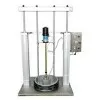
Drum pumps are portable pumps designed exclusively to facilitate safe and efficient transfer of low-viscosity fluids from one container to another. They eliminate the need to pivot heavy barrels by fitting on the upper opening of containers to allow the safe passage of fluids. Drum pumps are available in different materials, models, and tube lengths for different liquids. Different electric drum pumps are able to be driven by the same motor.
Related Product

The ilter is an indispensable device on the transmission medium pipeline. After the ilter has a certain size ilter drum, its impurities are blocked. When it needs to be cleaned, the detachable ilter drum can be removed, processed and reloaded. Therefore, easy to use and maintain. these valves compensate the pulsations which occur during the material delivery with piston pumps due to the changeover position of the pump. Such pulsations would cause a short- time drop of pressure and lead to a slight reduction of the material low. In case of small metering quantities, this might impair product quality as especially for such applications an absolutely consistent material low must be ensured.

Filling: The valve is in the initial position when the control pressure applied on the compressed-air connection. The valve needle in the control valve is in the upper position, thus closing the material outlet. The material access to the metering chamber is open. The material enters the control valve by means of the material pressure and lows into the metering chamber. Due to the contact surface of the piston, the piston executes an upward stroke. The metering chamber ills up automatically to the pre-deined volume. Metering: Material is metered when the compressed air connection of the valve is charged with compressed air. The valve needle executes a downward stroke, thus closing the material access to the metering chamber. The material outlet opens. The material pressure has an efect on the piston step, which enters the metering chamber and feeds the material to the material outlet. An accurate metering volume is discharged. The snuf back efect carried out during the reilling, prevents the material from dripping after metering is inished.

Luber has completely reengineered its product range in the area of drum pumps suiting the needs of its customers speciically having grease application in mind. They feed single component media such as greases and oils from NLGI0 to NLGI3 directly and clean from original containers. Luber drum pumps have prooved themselves useful as central material supply systems as well as supplying single stations. Luber drum pumps are manufactured as modular, robust and fail- safe, as well as remarkably service and maintenance friendly.
Advantages of Drum Pumps
Toxic Chemical Transfers
With drum, tote, and barrel pumps, you can safely transfer toxic and highly corrosive fluids from container to container. One benefit is that this process dramatically reduces the risk of personal injury.
However, there's another benefit. You'll experience fewer repairs and remain compliant with current safety standards. Wastewater treatment, commercial aquariums, and chemical distribution are just a few of the many applications.
Portability
When it comes to portable systems, you can't beat drum and barrel pumps. With a system like this, you can safely and easily transfer a small volume of liquid into a container.
However, this same pump can empty a full plating truck. Even with a lightweight design, these pumps are amazingly strong and durable. If you want a system that you can move from one application to another, consider tote pumps.
Testing and Measurement
Barrel and chemical drum pumps make both testing and measurement processes more convenient. Another thing, as a portable pumping solution, you can test liquids in different areas without compromising on speed or efficiency. Overall, this pumping system simplifies the process of getting accurate water purity and chemical level measurements.
Fast Transfers
Chemical drum pumps allow you to complete transfers quickly, which is great for meeting tight deadlines. However, there's another advantage to this. By transferring fluids safely, efficiently, and fast, you can increase the number of deliveries. That'll speed up production and keep deliveries on schedule. The outcome – happy customers and the potential for growth.
Noise Reduction
Drum and tote pumps are surprisingly quiet. Whether operating a lot of equipment or with a facility near public businesses, this is a great way to cut down on noise. The quieter the work environment, the better. Your employees can continue to operate these pumps but without developing hearing-related problems.
Top Reasons to Use Drum and Hand Pumps
When choosing a laboratory pump, why would you opt for a drum pump or a hand pump? Drum pumps easily and safely transfer fluids from barrels and drums or other storage vessels up to 200 liters in capacity. Manually-operated hand pumps are economical and flexible. They can be used to transfer water or fuel from containers into tanks and pump acids, alkalis, detergent, oils, or alcohol from drums, carboys or tanks.
Drum pumps
Drum pumps may be hand operated or may include air-operated, variable-speed, and electric-driven motors. The motor may be explosion proof or batch controlled for automatic dispensing of preset volumes. The pump tubing material (plastic, PVDF, stainless steel) is important and must be compatible with the chemical to be pumped. Drum pumps may offer short to long tube lengths and small to large container capacities. Mixing drum pumps ensure media are properly mixed and homogenized while also pumping it in a single operation.
Hand pumps
Hand-operated pumps are some of the industry's simplest and most economical pumps. They include diaphragm, piston, siphon, and rotary hand-operated drum pumps. These pumps are crafted of low cost plastics, stainless steel, or PTFE. Some hand pumps are designed for pumping shear-sensitive or particulate-laden fluids. Hand-operated vacuum pumps are also used in laboratories for checking leaks, filtration, siphoning, and more.
Why Use?
● Compatibility: Available with different tubing set materials for compatibility with your application
● Flexibility: Adapters enable use with a range of containers
● Safe options: Air-operated drum pumps can be used where electrical power may be impractical or unsafe; hand-operated pumps may be an ideal choice when a disposable pump is necessary
● Economical: Many hand pumps and drum pumps are available for budget-conscious users
Drum Pump Actuators
Manual, electric, and pneumatic drum pumps have very similar designs and operating principles. The primary difference is how the pumps are powered.
Manual
Manual drum pumps, or drum hand pumps, have a rotary handle (rotary drum pump) or lever that a user operates to create suction.
Electric
Electric drum pumps use an AC or DC motor to power the pump's impeller. These motors have varying power depending on requirements.
Pneumatic
Pneumatic drum pumps use an air motor or air-operated diaphragm pump mechanism that is driven by the flow of compressed air or gas.
Drum Pump Design
Beyond the actuator design, these pumps have similar components:
Suction pipe
The suction pipe is the long tube that reaches down to the bottom of the drum. This pipe is typically made of plastic, stainless steel, or another corrosion-resistant material, ensuring it can handle a wide range of fluids. The material used to construct the suction pipe must be resistant to the material being pumped. Read our chemical resistance guide to learn more.
Discharge spout
The discharge spout is where the fluid exits the pump. The fluid is directed from here into a container or another storage unit.
Although they operate similarly, the three types of drum pumps are suitable for different types of applications.
Manual: The primary benefit of a hand-operated drum pump is that it does not require a power source. This drum pump type is suitable for jobs that require a small amount of liquid to be transferred. The liquid should be low-viscosity (e.g., water, light oils, and mild chemicals). An example type of pump is a water drum pump.
Electric: An electric drum pump can transfer large volumes of liquids, including high-viscosity liquids (e.g., electric oil drum pump). This high-viscosity drum pump provides a continuous flow, making it suitable as a chemical drum pump or a food-grade drum pump.
Pneumatic: A pneumatic drum pump does not require electricity to operate. Therefore, this type of drum pump is safe in environments where there's a risk of explosion or fire (e.g., petroleum, chemical, and paint and coatings industries). This type of pump can be a drum pump for gasoline.
Drum Pump Selection Criteria
Consider the following criteria when choosing between drum pumps:
Pump Speed: The flow rate of a manual drum pump depends on the user's effort. Typically, however, manual drum pumps have lower flow rates than electric and pneumatic pumps. Electric drum pumps tend to have the highest flow rates, whereas pneumatic pumps offer variable speeds controlled by air pressure.
Material: Each type of drum pump is typically made from plastics, cast iron, or stainless steel, depending on the compatibility with the pumped fluids.
Power Availability: Manual drum pumps are the only pumps that don't need an external power source. Electric drum pumps need a steady electricity source and pneumatic drum pumps need compressed air and a pneumatic system.
Self-priming: Self-priming for a drum pump refers to the pump's ability to vent air from the suction line and prime itself without needing manual intervention. Typically, any type of drum pump is self-priming. Check with the manufacturer to be sure.

The drum pump consists of a drum rotor rotating in the center and a drum fixed in the pump casing. There is also an inlet and an outlet inside the pump casing.
When the rotor starts to rotate, the grooved part of the drum rotor gradually draws in liquid from the inlet. The grooved portion of the drum rotor seals against the inner wall of the drum, forming a series of sealed chambers.
As the rotor continues to rotate, the volume between the chambers and the pump casing increases and liquid is drawn into the chambers through the inlet.
As the rotor continues to rotate, the grooved portion of the drum rotor separates from the inner wall of the drum, forming a series of sealed spaces. These spaces will gradually move from the inlet to the outlet.
As the rotor continues to rotate, these spaces will push the liquid toward the outlet, completing the discharge of the liquid.
Drum Pump Maintenance
Clogging: Check the screen filter and suction pumps for dirt and clogging. If you see any impurities that may potentially mitigate the full potential of the pump, you can simply clean it with pliers, a blunt rod or even your fingers!
Piston Leakage: To fix this, you need to verify that the piston is not loose or cut.
Air Leakage: This happens when the components are not tightly threaded. To avoid air leakage, piece the parts together firmly, or better yet, seal them with a Teflon tape.
Valve or Gasket Leakage: Inspect the instrument for weak spring or loose cover plate bolts, and then you can follow up from there!
Different Drum Pumps for Different Needs
Depending on the nature of the use, these pumps can be combined with a variety of motors: commutator motors, brushless motors, three-phase motors and pneumatic motors. The standard 200L drum pump is versatile, but you can customize the immersion length from 300mm-3000mm to suit your pumping needs. Before learning how to use a drum pump, you need to analyze the nature of the fluid being used. In order for a drum pump to utilize its full capabilities, the material of its drive shaft needs to be compatible with the fluid it is pumping.
Pumps with PP (polypropylene) tubing made of 316Ti stainless steel are suitable for pumping neutral and flame-retardant fluids.
PP tubing with a Hastelloy 2,4610 drive shaft is designed to pump more aggressive media.
Drum pumps with aluminum tubing are well suited for mineral oil-based products with a maximum viscosity of up to 1000 mPas.
PVDF (Polyvinylidene Fluoride) or CPVC (Chlorinated Polyvinyl Chloride) are specially designed for acids and other aggressive media.
Neutral liquids such as cleaning agents and thin viscous foodstuffs can be optimally pumped by means of a stainless steel drive shaft.
Electric drum pumps with mechanical seals are ideally suited for rapidly drying or crystallizing media. They also adapt well to frequent media changes. They have a longer service life with abrasive media than seal-less pumps. You can also disassemble pumps with mechanical seals for easy cleaning. On the other hand, with seal-less pumps, you don't have to worry about any seal damage. They have a low overall wear rate and long bearing life.
Reasons to Use a Drum Pump
Compatibility
Even though Drum Pumps require some muscle to operate them, they are extremely compatible with various attachments that allow you to connect them with electrical supplies for automatic function. This compatibility feature even lets users connect the pump's motors with the internet for a truly automated experience using the Internet-of-Things. This can boost productivity by a tenfold margin in your industry.
Flexibility
These pumps are extremely flexible in terms of the containers they can be attached for use with. They also have a range of options when it comes to choosing their tubes. This means a single pump can be used on various kinds of barrels without the need to worry about different pump sizes.
Safety
A major reason for which people prefer using Drum Pumps in their industries is that they are safer than most other kinds of pumps. They are inert towards most chemicals and are hence the right choice for transferring volatile compounds. They are also safe to use in areas where electricity isn't a safe choice.
Our Factory
As a specialized manufacturer of self-lubricating bearings & bushings, Marginal Bearing, which was founded in the year 2010, is devoted to researching and producing new self-lubricating bearing materials. After years of effort, we have successfully developed various bearing materials with many different standard bearing sizes, including Three-layer Metal-polymer, self-lubricating bearings, Two-layer, metal-polymer, self-lubricating bearings, Bi-metal composite, self-lubricating bearings, Copper wrapped boundary lubricating bearings, High performance steel bearing, Plastic compound materials bearings and Filament wound composite materials bearings.
Applications covered are automotive industry, construction machinery, plastic manufacturing machinery, OA machinery, material handling equipment, dock side machinery and hydraulic transmission parts. In brief, our bearings can be used wherever there is rotation or linear motion between mechanical parts where lubricating is not allowed or external lubricating accessibility is limited.
With more than 10 years of experience on the researching, producing and promotion of self-lubricating bearings, Marginal Bearing can deliver not only high-performance products but also high-quality services, such as material selection, simulation test, engineering design and installation. The self-lubricating bearing and technology is now performing its beneficiary roles in the traditional industry area and further more providing variable solutions in the industry areas related to our daily life such as the public transportation, entertainment, energy, civil construction, environment protection facilities and aerospace industry.

FAQ
Q: What is a drum pump?
Q: How does a pneumatic drum pump work?
Q: What are the advantages of using an Air Operated Drum Pump?
Q: What types of fluids can be transferred using a Drum and Barrel Pump?
Q: What safety precautions should be taken when using a Drum and Barrel Pump?
Q: How do I maintain my Drum and Barrel Pump?
Q: What factors should I consider when selecting a Drum and Barrel Pump?
Q: Can I use a Drum and Barrel Pump to transfer flammable fluids?
Q: Can Drum and Barrel Pumps be used with food or pharmaceutical products?
Q: Can Drum and Barrel Pumps be repaired if they break down?
Q: Where can I purchase a Drum and Barrel Pump?
Q: How do I choose a drum pump?
Q: Do drum pumps really work?
Q: What is the function of the drum pump?
Q: How do I know which pump to use?
Q: What is the best drum technique?
Q: What are the three primary functions of a pump?
Q: How does a drum motor work?
Q: What is the pressure in psi required to lift water?
Q: How does a drum handler work?
Hot Tags: drum pumps, China, manufacturers, suppliers, factory, wholesale, customized, buy, pricelist, pricelist, in stock, free sample, Bimetallic Bushes, Metric Carbon Cylindrical Bushings, SP Strip Standard Metric Size, Bush Thrust Washer, Steel With PTFE Fiber Fabric Bearings, Aluminum Matrix Composite Bearing


