In the realm of industrial machinery and equipment, bushings play a crucial role in ensuring smooth operation and longevity. Two commonly used types of bushings are flange carbon bushings and graphite bushings. As a supplier of Flange Carbon Bushings, I am often asked about the differences between these two types of bushings. In this blog post, I will delve into the characteristics, applications, and advantages of each type to help you make an informed decision for your specific needs.
1. Material Composition
- Flange Carbon Bushings
Flange carbon bushings are primarily made of carbon steel. Carbon steel is an alloy that contains carbon as the main alloying element, typically ranging from 0.05% to 2.1% by weight. The addition of carbon enhances the hardness, strength, and wear resistance of the steel. Depending on the specific requirements, other alloying elements such as manganese, silicon, and chromium may also be added to further improve the properties of the carbon steel. For example, manganese can increase the hardenability of the steel, while chromium can enhance its corrosion resistance. - Graphite Bushings
Graphite bushings, on the other hand, are made of graphite, a form of carbon with a unique crystalline structure. Graphite has excellent lubricating properties due to its layered structure, which allows the layers to slide over each other easily. This self - lubricating characteristic is one of the most significant advantages of graphite bushings. In addition to pure graphite, graphite bushings may also be impregnated with other materials such as resins, metals, or polymers to improve their mechanical properties and performance in different environments.
2. Physical and Mechanical Properties
- Hardness and Wear Resistance
Flange carbon bushings are known for their high hardness and wear resistance. The carbon content in carbon steel gives it the ability to withstand high loads and abrasive forces. This makes flange carbon bushings suitable for applications where there is significant wear and tear, such as in heavy - duty machinery, automotive engines, and industrial conveyors. The hardness of carbon steel can be further enhanced through heat treatment processes such as quenching and tempering.
Graphite bushings, although not as hard as carbon steel bushings, have good wear resistance in their own right. The self - lubricating nature of graphite reduces friction between the bushing and the mating surface, which in turn reduces wear. However, graphite bushings are generally more suitable for low - to medium - load applications compared to flange carbon bushings. - Lubrication Requirements
Flange carbon bushings usually require external lubrication to reduce friction and prevent wear. Lubricants such as oil or grease are commonly used to ensure smooth operation. Without proper lubrication, the carbon steel bushings can experience increased friction, heat generation, and premature wear.
Graphite bushings, as mentioned earlier, are self - lubricating. This means that they can operate without the need for external lubricants in many applications. This feature makes graphite bushings ideal for environments where lubrication is difficult or not allowed, such as in food processing machinery, clean rooms, and some high - temperature applications. - Thermal Conductivity
Carbon steel has relatively high thermal conductivity, which allows it to dissipate heat generated during operation. This is beneficial in applications where heat buildup can be a problem, such as in high - speed machinery. The ability to conduct heat helps to prevent overheating and extends the service life of the bushing.
Graphite also has good thermal conductivity, but its performance may vary depending on the type and quality of the graphite. In some cases, graphite bushings can be used in high - temperature applications due to their ability to conduct heat and their relatively high melting point.
3. Applications
- Flange Carbon Bushings
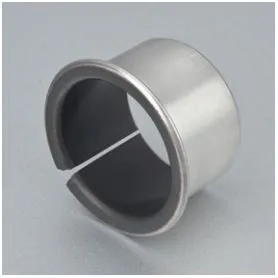
Flange carbon bushings are widely used in a variety of industries. In the automotive industry, they are used in engine components such as connecting rods, pistons, and camshafts. The high strength and wear resistance of flange carbon bushings make them suitable for the high - stress and high - speed operation of automotive engines.
In industrial machinery, flange carbon bushings are used in conveyor systems, pumps, and compressors. They can withstand the heavy loads and continuous operation in these applications. You can find a wide range of Carbon Flange Bushings and Flange Carbon Bushings on our website to meet different industrial needs. - Graphite Bushings
Graphite bushings are commonly used in applications where self - lubrication is required. In the food and beverage industry, they are used in equipment such as mixers, conveyors, and filling machines to avoid contamination from lubricants. In the aerospace industry, graphite bushings are used in aircraft control systems and landing gear due to their lightweight and self - lubricating properties. They are also used in some electrical applications, such as in motors and generators, where their electrical conductivity can be an advantage. Inch Carbon Cylindrical Bushings are another option for applications that require specific sizing and performance.
4. Advantages and Disadvantages
- Flange Carbon Bushings
Advantages: - High strength and load - carrying capacity, suitable for heavy - duty applications.
- Good wear resistance, especially when properly lubricated.
- Can be heat - treated to improve hardness and other mechanical properties.
- Widely available in different sizes and configurations.
Disadvantages:
- Require regular lubrication, which can be a maintenance challenge in some applications.
- Prone to corrosion in certain environments, especially if not properly protected.
- Relatively heavier compared to some other materials, which may be a drawback in weight - sensitive applications.
- Graphite Bushings
Advantages: - Self - lubricating, reducing the need for external lubricants and maintenance.
- Can operate in high - temperature and high - vacuum environments.
- Lightweight, which is beneficial in applications where weight is a concern.
- Resistant to chemicals and corrosion in many cases.
Disadvantages:
- Lower load - carrying capacity compared to flange carbon bushings.
- Can be more brittle than carbon steel bushings, making them more susceptible to damage from impact or shock.
- Higher cost in some cases, especially for high - quality graphite materials.
5. Making the Right Choice
When choosing between flange carbon bushings and graphite bushings, several factors need to be considered. The load requirements of the application are crucial. If the application involves high loads and heavy - duty operation, flange carbon bushings are likely the better choice. However, if the application requires self - lubrication, operates in a high - temperature or clean environment, or has weight restrictions, graphite bushings may be more suitable.
The operating environment also plays an important role. In corrosive environments, graphite bushings may have an advantage due to their better corrosion resistance. In applications where heat dissipation is critical, both types of bushings can be considered, but the thermal conductivity and heat - handling capabilities of each need to be evaluated.
6. Conclusion and Call to Action
In conclusion, flange carbon bushings and graphite bushings have their own unique characteristics, advantages, and disadvantages. Understanding these differences is essential for selecting the right bushing for your specific application. As a supplier of Flange Carbon Bushings, we are committed to providing high - quality products and professional advice to our customers. If you are in need of bushings for your industrial or mechanical applications, we invite you to contact us for more information and to discuss your specific requirements. Our team of experts will be happy to assist you in making the best choice for your project.
References
- ASM Handbook, Volume 1: Properties and Selection: Irons, Steels, and High - Performance Alloys
- "Graphite Materials and Their Applications" by John Doe
- "Engineering Materials and Their Applications" by William Smith